The Breath – Historical Connections Series
The crowd began to disperse in groups. Peter had commanded baptism for those who wanted to receive this holy ‘Breath’ whose power they had just witnessed. Small groups were heading down to the many mikvah, the ritual baths used by the Jews for cleansing prior to entering the Temple. Larger groups were making their way to the Pool of Siloam, and the Upper and Lower Gihon. With these people of all nationalities went the friends of Peter, this largely Galilean group of more than a hundred followers of Yeshua, the Christ. Word was that this group had been gathering daily for prayer for some weeks in the Temple courts. They led their little contingents to places of immersion in cleansing waters, the contrition of the previous moments now giving way to joy and laughter.
As the crowd dispersed, I called my men over. Septimus was shaking – emotion written all over his face. Fabius, Tertius and Marcus were silent – I could not read their reactions.
“We are Romans – we are on duty,” I reminded my men. “Septimus, do not get involved with these people and their Yeshua, whoever he is.”
Together, in silence, we looked down at the many mikvah pools, the spray glistening in the sunlight. We listened to the sounds of the splashing water, the exclamations of joy and thankfulness, shouts in many languages, and cries of praise to the one God these Jews believed in. The sights and sounds of the phenomena we had witnessed that morning continued long into the day until the sun set over west Jerusalem. This spiritual force, this numen, this ‘Breath’ that Peter had talked about was everywhere. An aura seemed to settle on each group of Jews and, as they experienced its presence, their joy was barely contained. The name of Yeshua was on many lips. His name continued to awaken in me feelings of expectation that I did not understand. I tried to dismiss them. I was a Roman soldier. Having a Jewish mother did not make me a Jew. This was not for me.
Yet, this was a day which has lived forever in my mind’s eye. I sensed then that it would go down in history, and there’s no doubt that it birthed a movement that grew and spread across the world over the decades following. I didn’t know what it meant back then, and I wondered if I ever would. It would take a long time for me to make sense of it.
Three thousand people. A mass baptism. The first. Two thousand years later on 10th October 2026 at Bridlington beach, about 550 people were baptised in the North Sea. In September at Bigbury on Sea about 170 people were baptised. Bournemouth has held annual mass baptisms of about 100 people for a few years. These events have been seen by some as signs of a “Quiet Revival” amongst the young in the UK.
Around the world and down through history there have been many occasions of mass baptism as people have followed the example Jesus set when baptised by John in the River Jordan. The largest recorded mass baptism according to the Guiness World Records is 18,272 people in the Philippines on 7th September 2014. A single Sunday across the United States saw 26,657 people baptised on Pentecost Sunday.
I’m sure that a lot of careful planning and organisation went into these mass baptisms, something that would not have been possible at the first Pentecost and at so many other spontaneous events in the Acts of the Apostles. Many of us love spontaneity, sometimes seen as a mark of authenticity, but the administrators among us and those who like things to be “tidy” prefer a bit of organisation! The early Christians had to get used to this soon enough as the first recorded conflict amongst those early believers (Acts 6) occurred as a result of poor organisation in the distribution of food!
So how was such an event as spontaneous mass baptism managed in the city of Jerusalem when the sea is 32 miles away and the nearest river, the Jordan, is 21 miles away?
The answer is more straightforward and convenient than you might think. All around the Temple in Jerusalem were nearly forty ritual “mikva’ot” (mikvah) pools, just like the baptistries built into many churches today, used in Judaism for purification purposes. They were used by men and women before Shabbat, Yom Kippur, weddings or significant spiritual milestones, for women after menstruation or child birth or whenever there was an issue of what was considered spiritual uncleaness in an individual. In Jerusalem there were many mikvah pools around the Temple Mount because Jewish law required pilgrims and priests to achieve ritual purity in water before entering the presence of God in the sacred temple grounds.
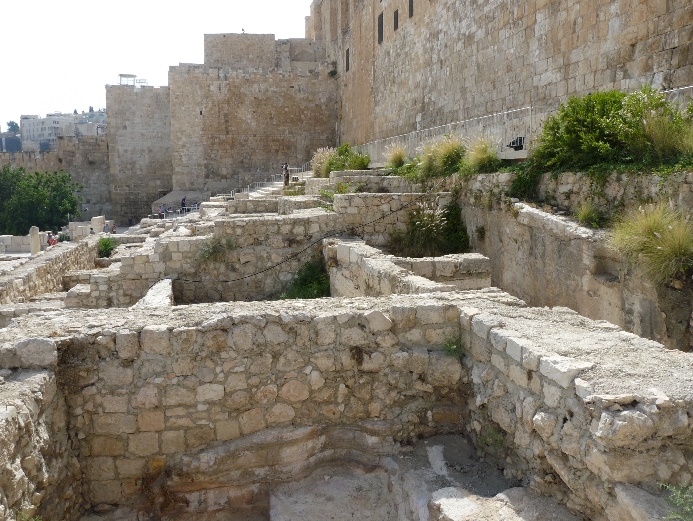
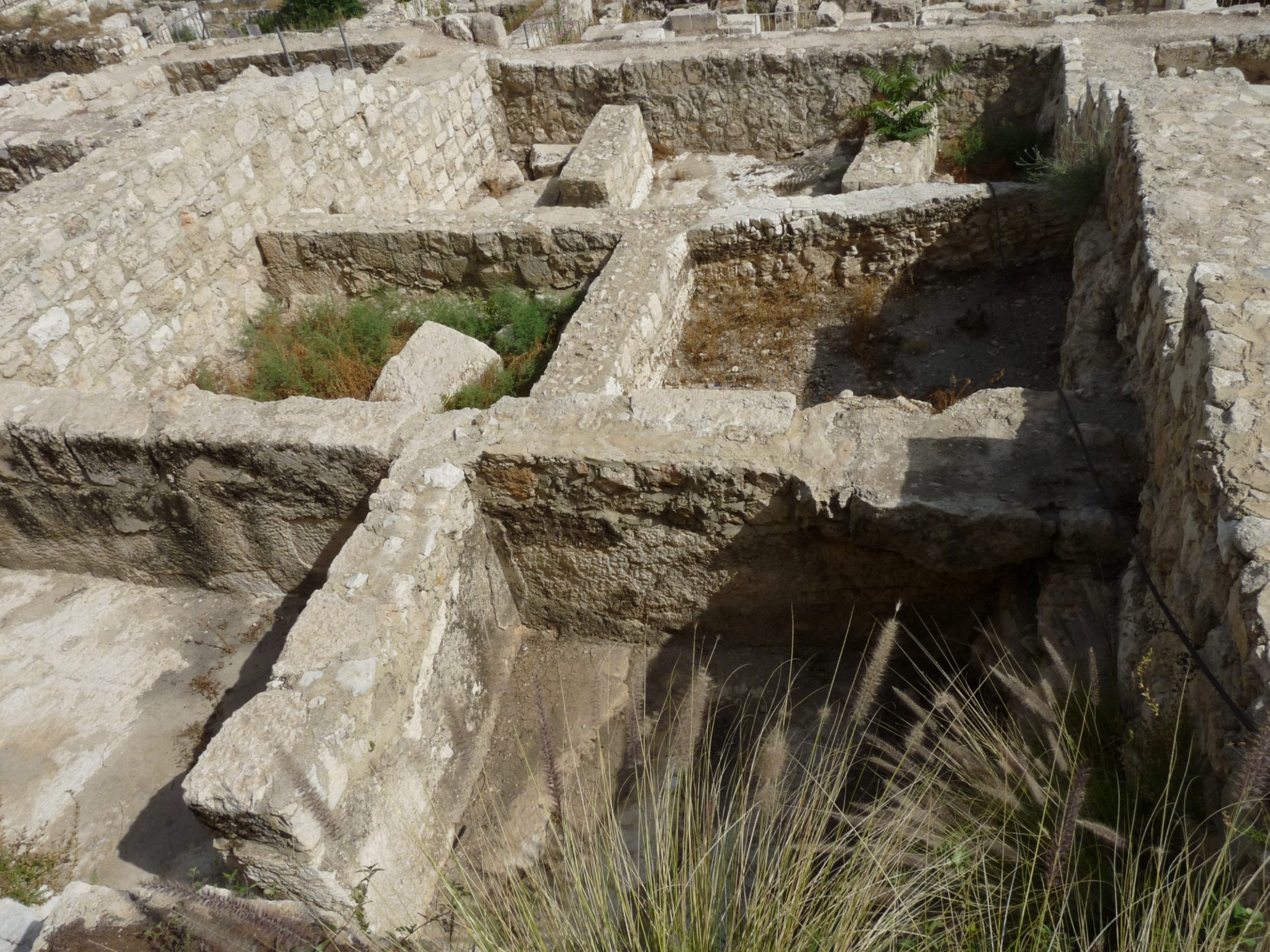
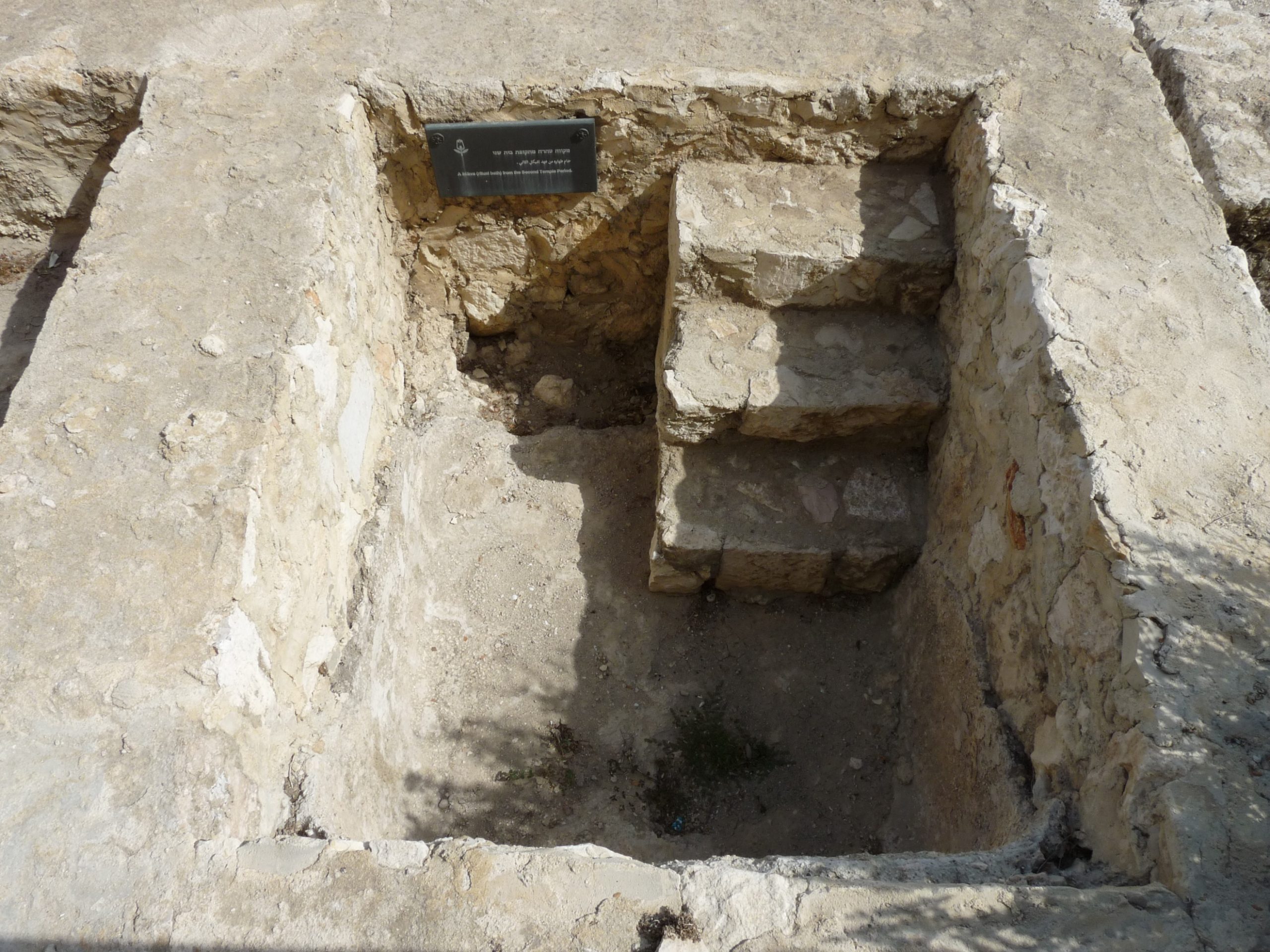
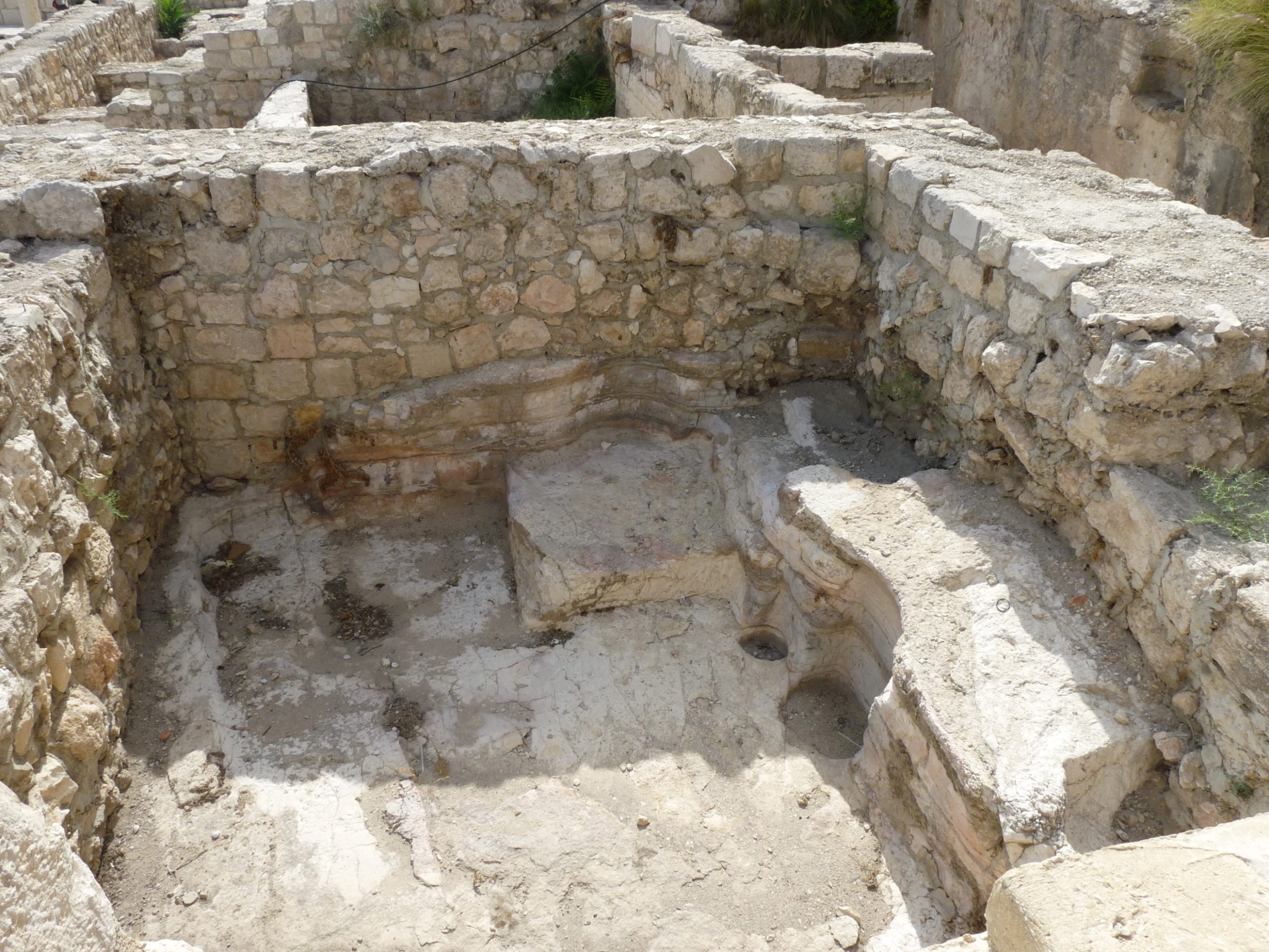
| Photos: Mikvah pools below the “Teaching Steps” on the southern side of Temple Mount. |
If you visit the Temple Mount today you can see some of these pools still in existence. (See photos below). Almost certainly it is these pools which were used for baptisms and possibly also places like the larger pools of Siloam and Bethesda which were less than half a mile away.
Presumably the twelve apostles split themselves up amongst the crowd to oversee clusters of people, although it is possible that these new believers baptised themselves just as they had previously done in following their Jewish rituals. Down through history however, baptism has generally been overseen by a Priest, Minister or Pastor, confirming authenticity and helping to ensure that the full significance and meaning of the act is explained and understood.
Right from the beginning, Christians incorporated this Jewish ritual of full immersion and spiritual cleansing into their typical initiation practices. So it is to this day, new believers are encouraged to be baptised. The practice has been modified by many denominations down the centuries where they practice sprinkling rather than immersion and some baptise babies in this way.
For many Christians, the Baptists and Pentecostals in particular, this is seen as an unbiblical practice and loses much of the symbolic significance of full immersion in the sea, a river or a pool constructed for the purpose.
For them, the act of spiritual cleansing is not considered to be the baptism itself. That takes place in the heart. Only by a recognition of sinfulness and repentance – turning away from sin – and placing trust in Jesus Christ as the one whose sacrifice on the cross bought redemption from sin to all who choose to receive it, can the heart be cleansed and renewed. The immersion in water is seen as symbolic of an inner reality and a public confession of the decision to follow Christ. The submersion in water is like dying and being buried in a grave and then rising up to new life – a picture of association with the death and resurrection of Christ. It’s a very powerful and visual symbol.
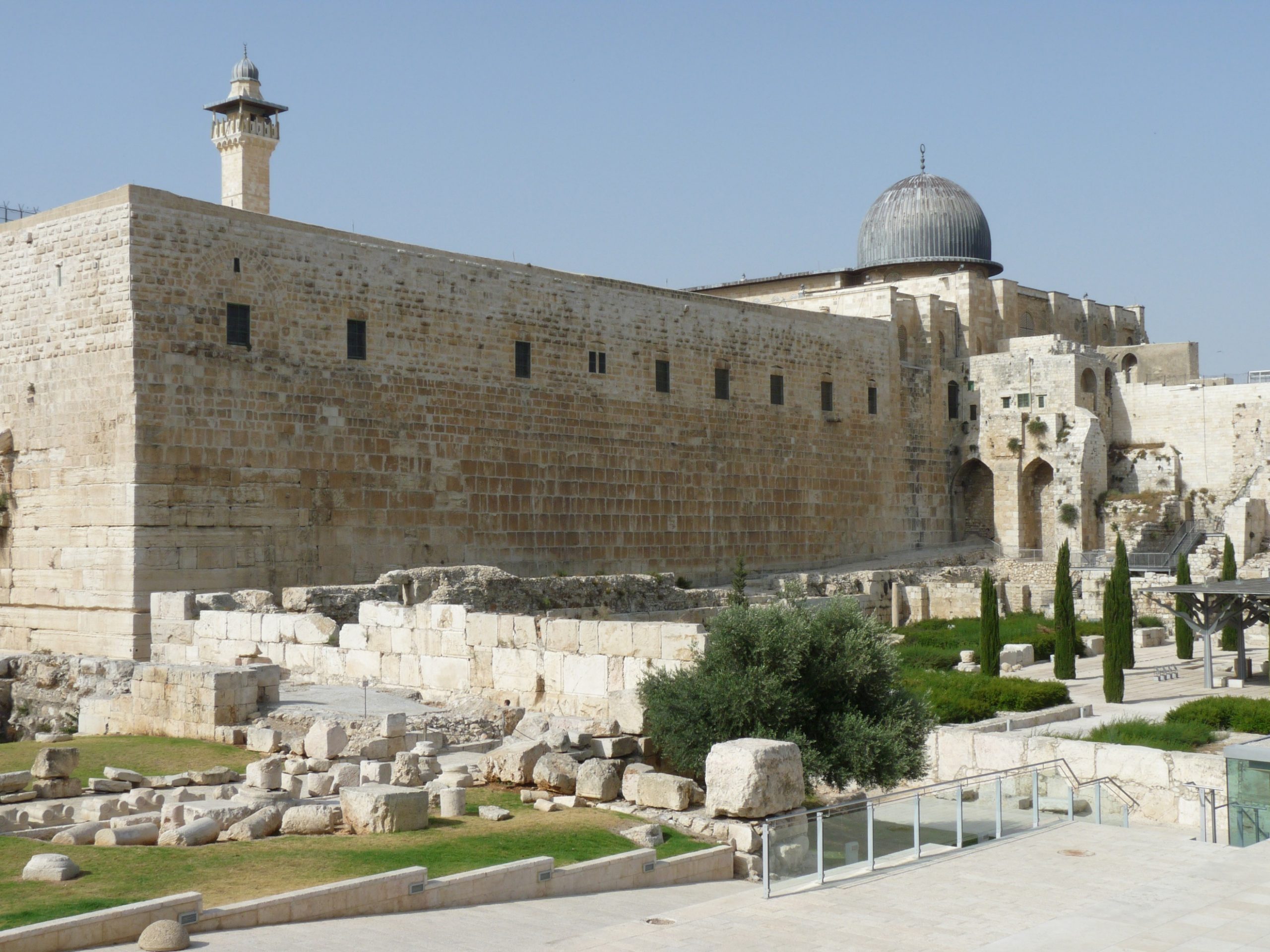
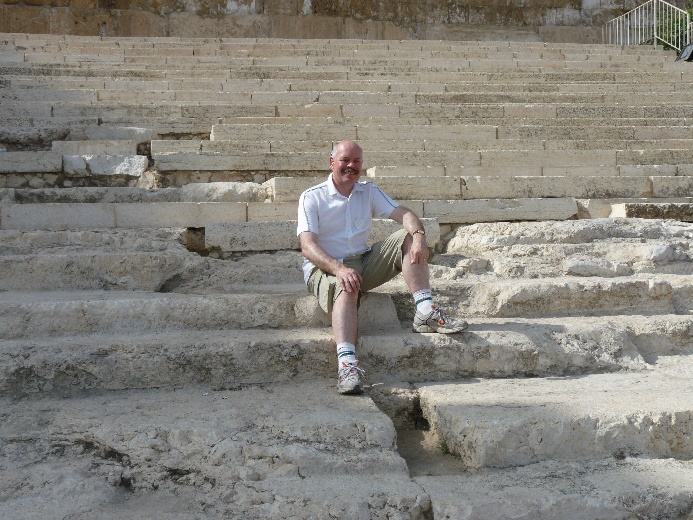
| Photos: Temple Mount and the author on the Teaching Steps above the mikvah pools |
Nor is this necessary or desirable to be repeated. It is a one-off event in a believer’s life. The exceptions to this might be when an adult turns to Christ and considers that their childhood baptism was the decision of others on their behalf and did not represent the vital choice they were now making to become a follower of Christ and show it in baptism.