When someone in authority makes a decision, the consequences are often carried by people who had no part in making it. An order may be efficient, a policy may be enforceable, and a protest may be silenced. None of those outcomes, by themselves, proves that justice has been served. The harder question is what happens to human dignity when power goes unquestioned.
WHEN OBEDIENCE BECOMES AN EXCUSE
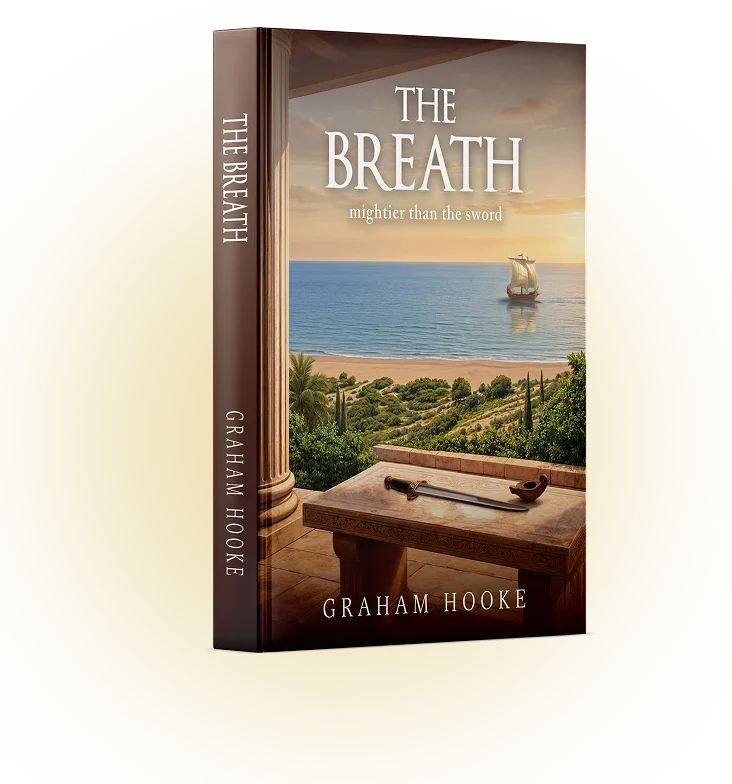
Graham Hooke explores this dilemma through Marcellinus, a Roman soldier who discovers the moral cost of obedience. When Roman authorities use Temple funds for an aqueduct in Jerusalem, anger erupts. Marcellinus and fellow soldiers are ordered to disguise themselves among protesters and disperse the crowd. Their commander urges restraint, yet the soldiers beat unarmed people with devastating force. Marcellinus knows their violence goes beyond the intended response but clings to the thought that he was following orders.
His reasoning exposes a moral risk in any hierarchy: responsibility can become so divided that no one feels fully accountable. The person who gives an instruction may not witness its effects; those who enforce it may hide behind duty.
POWER MUST ANSWER TO THE VULNERABLE
In The Breath, the Roman habit of equating strength with authority meets a different account of leadership. Cornelius, himself a centurion, tells Marcellinus that Yeshua’s Kingdom gives special attention to the poor and the weak. That vision unsettles a soldier trained to prize dominance and regard vulnerability as a liability.
The contrast is not simply between force and gentleness. Any institution needs decisions, rules and the capacity to act. But justice asks who bears the cost of those decisions, whose voice is disregarded, and whether preserving order has become more important than protecting people.
THE COURAGE TO CHALLENGE UNJUST AUTHORITY
The challenge moves closer to home when Emperor Caligula orders his image placed in Jerusalem’s Temple. Mary resolves to join Jewish protesters who will stand unarmed against Roman forces. Marcellinus is terrified for her safety and tries to stop her, yet her determination forces him to face a form of courage that no weapon can supply.
Graham Hooke places these convictions within strained relationships rather than offering them as easy slogans. A person can believe in safety and still be tempted to silence another person’s conscience. The problem is not only what an emperor commands. It is how authority appears in a household, a workplace or any relationship where one person expects obedience.
TRUE JUSTICE BEGINS WITH ACCOUNTABILITY
Later, when Mary is killed amid unrest in Caesarea, Marcellinus condemns those responsible. Yet he also recalls the civilians he once harmed while suppressing protests. His grief is real, but so is the uncomfortable truth that he, too, has inflicted suffering.
That moment gives The Breath its sharpest lesson about justice. Accountability cannot be reserved for opponents. It begins when people examine their own decisions with the same seriousness they demand from others.
Power asks whether we can make something happen. Justice asks whether we should, at whose expense, and what we owe to those affected. A responsible leader must be willing to hear the second question before answering the first.
Read the book on Amazon: https://a.co/d/0bUn7xwq
Amazon UK link: https://www.amazon.co.uk/s?k=the+breath+graham+hooke